

This module includes interactive content that’s best supported on a desktop or laptop. Mobile access isn’t available right now. Please jump on a desktop or laptop to continue!
GO BACKReal stories and practical tips to help you through uni life ❤️


So far, we’ve explored what mental health is (and what it isn’t), and why it’s important to talk about it. We’ve also considered the power of listening to others’ personal experiences, and the valuable insights such stories can offer.Now we’ll put this into practise by looking at how we can support our mental wellbeing in very practical ways.
At batyr, we know the impact that taking small, practical steps to support our mental health has on our overall wellbeing. One way we do this is by creating Wellbeing Plans.
A Wellbeing Plan is like a personal guide. Think of it like a safety net tailored to your needs. It helps you keep track of the things that support your wellbeing, what to do when things feel tough, and who you can turn to for support. It's not just something to use when you're struggling. It's also a reminder of what helps you feel your best when things are going well.
This plan is yours. It's a space to reflect on what matters to you, what helps you cope, and how you can take care of yourself or reach out to others when you need to.


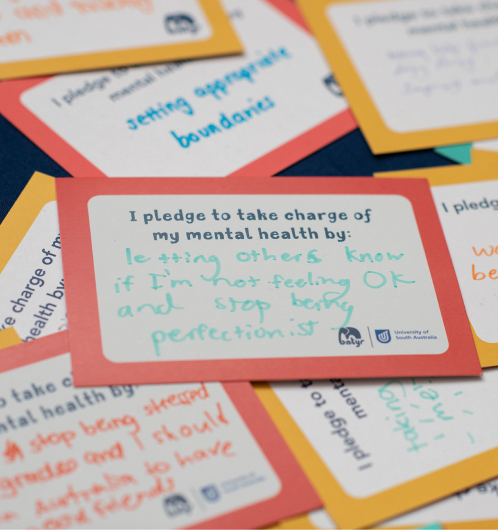
We’ll spend the rest of this module walking through the main elements of the Wellbeing Plan. Feel free to download a copy and work through it as we move through the module. You’re also welcome to complete it in your own time.
As we progress through the Wellbeing Plan, we will reflect on the following:
We all have different needs at different times, including what we need from the people we spend time with. Sometimes we need someone to chat with, someone to laugh with, or someone to just listen to us, without trying to fix things.The first page of your Wellbeing Plan helps you identify the people who support you in different ways.
There’s no ‘perfect’ answer here. These might be people you talk to every day, or just when things feel hard. Think about your classmates at uni as well, there are a lot of people who are navigating similar challenges when it comes to study and other aspects of the university experience. What matters is that you feel comfortable and supported by them.
Reflect on the questions on the right. Add the names and contact details of the people as you go along. You might want to include friends, family, teachers, Elders, or coaches.


Who is the first person I want to talk to when something’s on my mind?
Who can I reach out to when I want to share good news or have a laugh?
Who has my back when I’m struggling?
Who helps me feel safe, seen or motivated?
Sometimes we know we need support, but it’s hard to ask.This section of the plan (on page 3) gives you space to think about how you’d like to be supported and how you can communicate that to others.
How can I make sure I’m reaching out for support when I need it?
How can I let someone know if I need some support?
How else can people support me to feel my best?
How else can people support me when my mental health takes a dip?

